
📑 Table of Contents
- Choosing Your Rig: Van Life vs. Family Motorhome
- Phase 1: Sonoma County Vineyards to the Mendocino Bluffs
- The Route & Campsites
- Off-Grid Family Highlights
- Phase 2: The Redwood Coast & Avenue of the Giants
- Navigating Avenue of the Giants
- Where to Camp
- Phase 3: The Wild Oregon Shore
- Samuel H. Boardman State Scenic Corridor
- Bandon-by-the-Sea
- Campsite Strategy: State Parks vs. Luxury Resorts
- Top-Rated Stays Along the Route
- Practical RV Driving and Slow-Travel Tips
- Frequently Asked Questions
There is a distinct moment on any coastal road trip when the cabin quietens down, the interstate hum fades, and the Pacific horizon opens wide enough to swallow the windscreen. Travelling through Northern California into the misty headlands of Oregon is not a trip meant for rushing between check-in windows. It is tailor-made for slow travel the kind where you brew fresh coffee in a pull-out galley while watching morning fog roll through old-growth redwoods, and where coastal tides dictate your afternoon schedule.
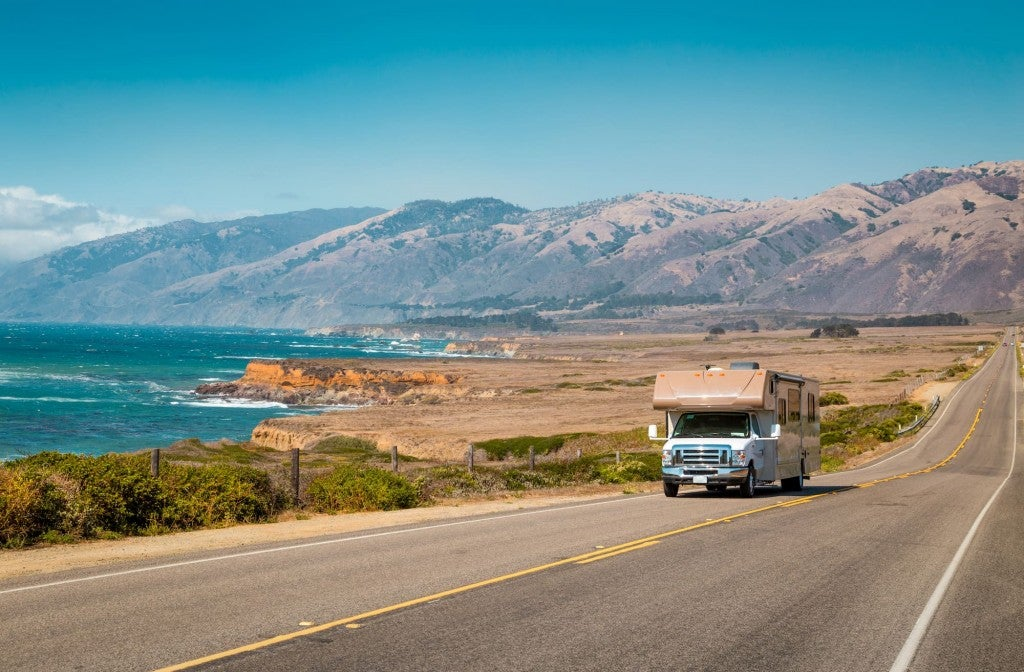
Taking an extended campervan or motorhome expedition along the Northern California and Southern Oregon coastlines stands out as one of the best coastal road trips in america. For families, traveling by RV bridges the gap between raw wilderness immersion and home comfort. Here is the definitive field guide to navigating this corridor, with vehicle choices, route milestones, and campsite logistics planned out down to the gravel pad.
Choosing Your Rig: Van Life vs. Family Motorhome
Selecting the right vehicle sets the tone for your entire journey. Slow travel demands functional storage, comfortable sleeping arrangements for everyone on board, and a layout that keeps everyone sane during rainy coastal mornings.
If you are traveling with children or multi-generational family members, finding the best family rv rental 2026 inventory comes down to cabover utility. Compact Class B campervans (built on Mercedes-Benz Sprinter or Ford Transit chassis) offer unbeatable agility in historic downtowns and along narrow bluff turnouts. However, active families carrying surfboards, hiking gear, and camp chairs often find storage stretched to the limit after day three.
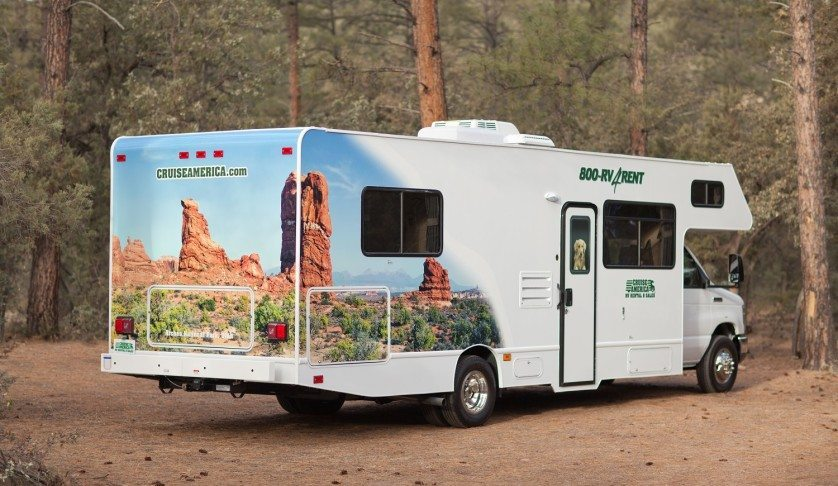
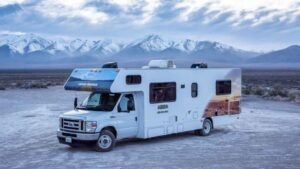
For larger family crews, a dedicated Class C motorhome remains the industry benchmark. Options like the Cruise America large motorhome c30 solve the bed-shuffling hassle entirely:
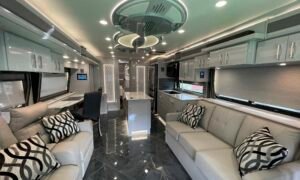
- Dedicated Sleeping Quarters: A rear queen bed for parents, an overhead cabover bunk that kids love, and a convertible dinette and sofa.
- Separation of Space: The split-bath setup (shower separate from toilet) prevents morning bottlenecks when getting the crew ready for an early tide-pool walk.
- On-Board Capacities: A 40-gallon fresh water tank and 30-amp generator let you boondock at rustic state parks for days at a time without hookup anxiety.
If you don’t want to circle back on yourself, look into a one way rv rental pacific coast itinerary. Picking up your rig in the San Francisco Bay Area and dropping it off in Portland or Seattle cuts out hundreds of miles of highway driving, leaving all your time for the scenic coastline.
Phase 1: Sonoma County Vineyards to the Mendocino Bluffs
Begin inland among the rolling vineyard corridors of Sonoma County before heading toward the Pacific. Setting out from Santa Rosa or Healdsburg, avoid the temptation to bolt straight toward the coast on Highway 101. Instead, follow Route 116 west through Sebastopol and Guerneville, letting the Russian River lead you beneath the cool shadow of coastal redwoods.
The Route & Campsites
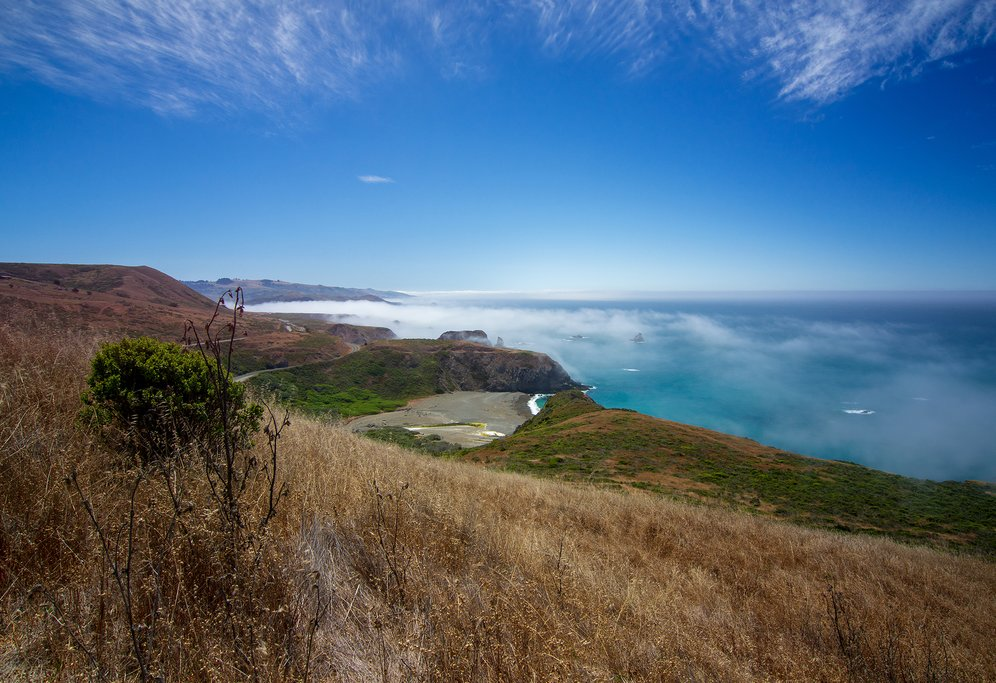
- The Drive: From Guerneville, track Highway 1 north through Jenner, where the Russian River empties into the ocean. The road climbs high onto sea cliffs, delivering dramatic vistas that set the tone for your trip.
- Basecamp: Secure a spot at Wright’s Beach (Sonoma Coast State Park) for true beachfront dry-camping, or head up to Manchester State Park if you prefer sprawling coastal dunes and quieter trails.
Off-Grid Family Highlights
- Russian Gulch State Park: Cross beneath the soaring concrete arch of Frederick W. Panhorst Bridge and hike the fern canyon loop out to a 36-foot waterfall.
- Mendocino Village: Park your rig in the public lot along Little Lake Street and wander the headland trails. The Victorian architecture feels straight out of an old maritime logbook, and local bakeries serve up warm sourdough and berry hand-pies that make an easy grab-and-go lunch.
- Glass Beach (Fort Bragg): An essential stop for kids to hunt for smooth, tumbled sea glass along the coves though park rules strictly require leaving every piece behind for future visitors.
Phase 2: The Redwood Coast & The Avenue of the Giants
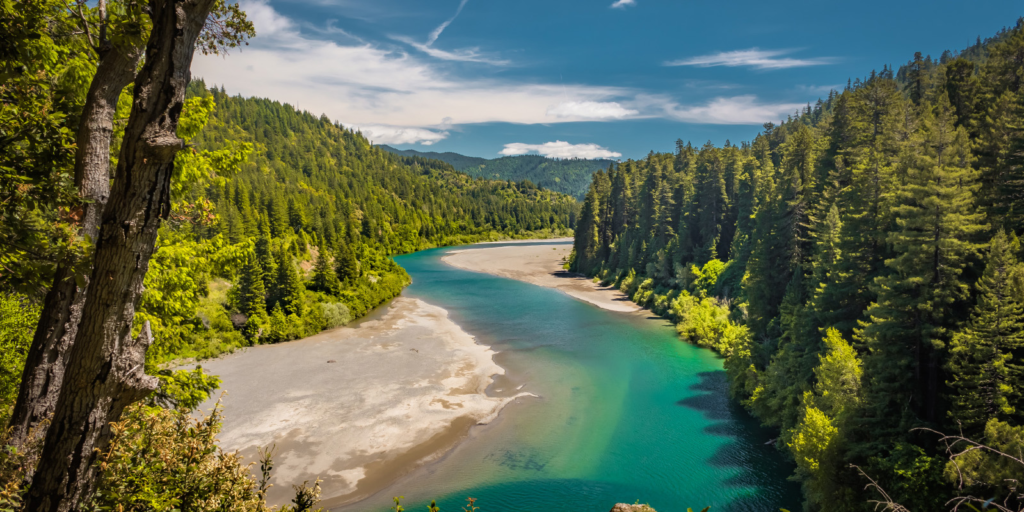
North of Fort Bragg, Highway 1 turns inland, merging with US Highway 101 through Leggett. This is where coastal scrub gives way to ancient forests. Redwoods do something special to the noise level inside a moving motorhome: as the canopy thickens overhead, the road noise drops away completely.
Navigating Avenue of the Giants
Take the 31-mile scenic detour running parallel to Highway 101. This stretch is fully paved and manageable for motorhomes up to 32 feet, provided you mind your clearance beneath low-hanging boughs.
- Founder’s Grove Nature Trail: A 0.5-mile flat loop that is ideal for all ages. It takes you past the fallen Dyerville Giant a massive 362-foot redwood that came down in 1991, shaking the ground miles away.
- Drury-Chaney Loop: Located near Avenue’s northern tip, this trail weaves through a carpet of redwood sorrel that looks like a sea of giant shamrocks.
Where to Camp
For an upscale stay with full 50-amp hookups, fast Wi-Fi, and riverside fire rings, reserve at Benbow RV Resort along the South Fork of the Eel River. If you prefer sleeping inside the forest itself, book Burlington Campground inside Humboldt Redwoods State Park well ahead of your travel dates.
Phase 3: Crossing the 42nd Parallel to the Wild Oregon Shore
As you cross from California into Oregon just past Crescent City, the scenery shifts. The redwood forests open up into the dramatic, windswept headlands of Southern Oregon. Sea stacks rise straight out of the surf, sea lion colonies bark from offshore ledges, and public-access beaches line the highway.
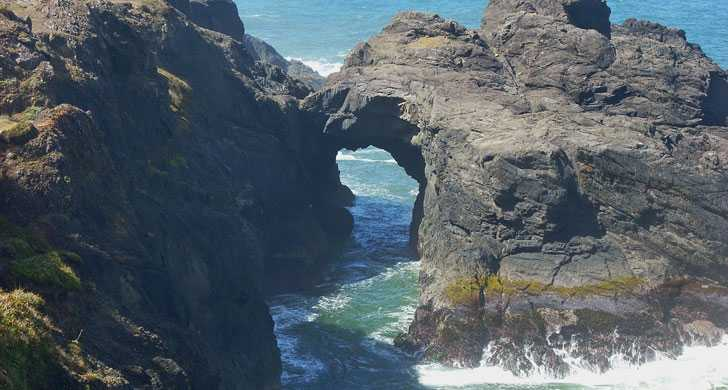
The Samuel H. Boardman State Scenic Corridor
This 12-mile stretch between Brookings and Gold Beach offers some of the most dramatic coastal scenery anywhere on the continent. Turnouts are frequent, but keep a close eye on approach angles if you are driving a long motorhome.
- Natural Bridges: An iconic viewpoint looking down on arched rock formations carved out by the ocean. Walk down to the timber viewing platform with the family, keeping children on the main path as the cliff drops steeply.
- Whaleshead Beach: Named for the offshore rock that spouts sea spray just like a surfacing grey whale when waves hit it right. Pack a tailgate lunch, pull into the day-use lot, and watch the swell roll in.
Bandon-by-the-Sea
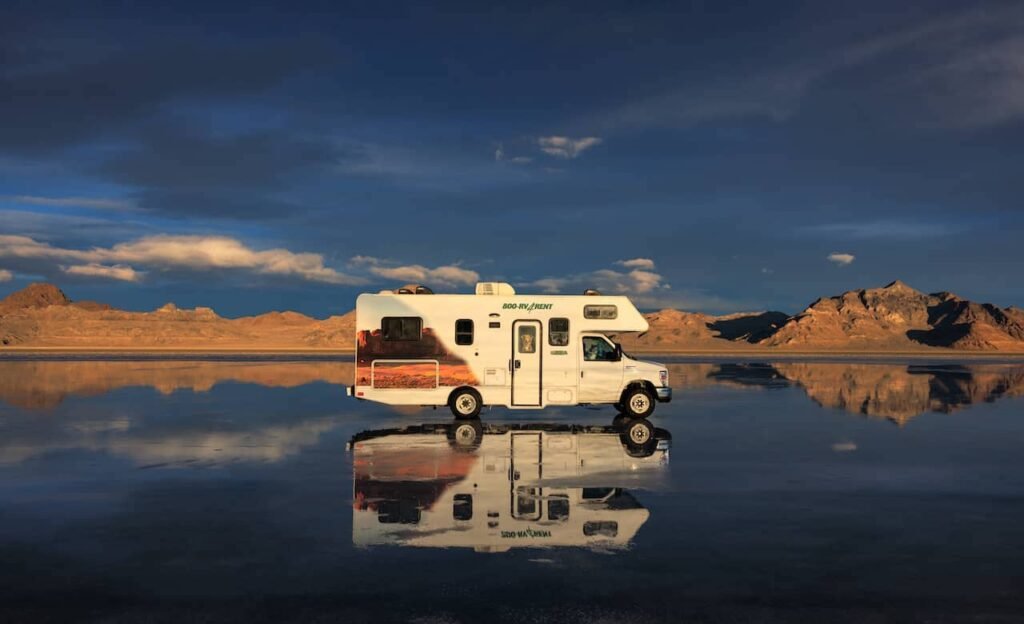
Farther north, Bandon balances artisan food with rugged beachscapes. Park the camper near the Old Town boardwalk for fresh clam chowder in sourdough bread bowls, then move the rig over to Face Rock State Scenic Viewpoint. At low tide, the flat sand mirrors the sky, creating a wide-open walking ground dotted with towering offshore sea stacks.
Campsite Strategy: Balancing State Parks with Luxury Resorts
A great pacific coast highway rv road trip with family finds a rhythm between rustic, off-grid nights and full-hookup resorts where you can catch up on laundry, hook into high-speed internet, and let the kids swim.
Top-Rated Stays Along the Route
- Caspar Beach RV Park (Mendocino, CA): Tucked into a sheltered cove right across from a calm beach. It offers full hookups, an on-site camp store, and kayak/paddleboard rentals right in the bay.
- Redwood Meadows RV Resort (Brookings, OR): Set just inland from the coastal wind, this clean park gives you full hookups and easy access to the Chetco River and Boardman Corridor.
- Bay Point Landing (Coos Bay, OR): A modern benchmark for luxury rv resorts pacific northwest. Features Scandinavian-style architectural pavilions, an indoor heated saltwater pool, fire pits at every concrete pad, and panoramic bay views.
Practical RV Driving and Slow-Travel Tips
- Use the Turnouts: Highway 1 and 101 have plenty of paved pull-outs. California and Oregon road laws require vehicles holding up five or more cars to pull over and let traffic pass. Take your time, cruise smoothly, and use the pull-outs often.
- Keep Fresh Water Filled: Salt-air spray coats your windshield fast. Keep your wiper fluid reservoir topped off with bug-wash solvent at every fuel stop.
- Account for Tides: Download an offline tide-table app like Tides Near Me. Iconic highlights—like the tide pools at Palmer’s Point in Patrick’s Point State Park or beach walking at Bandon—are completely submerged at high tide.
- Watch Your Fuel Range: Coastal diesel and gasoline prices jump sharply between major service hubs. Top up your tank in bigger towns like Ukiah, Eureka, and Coos Bay rather than remote beach outposts.