
Table of Contents
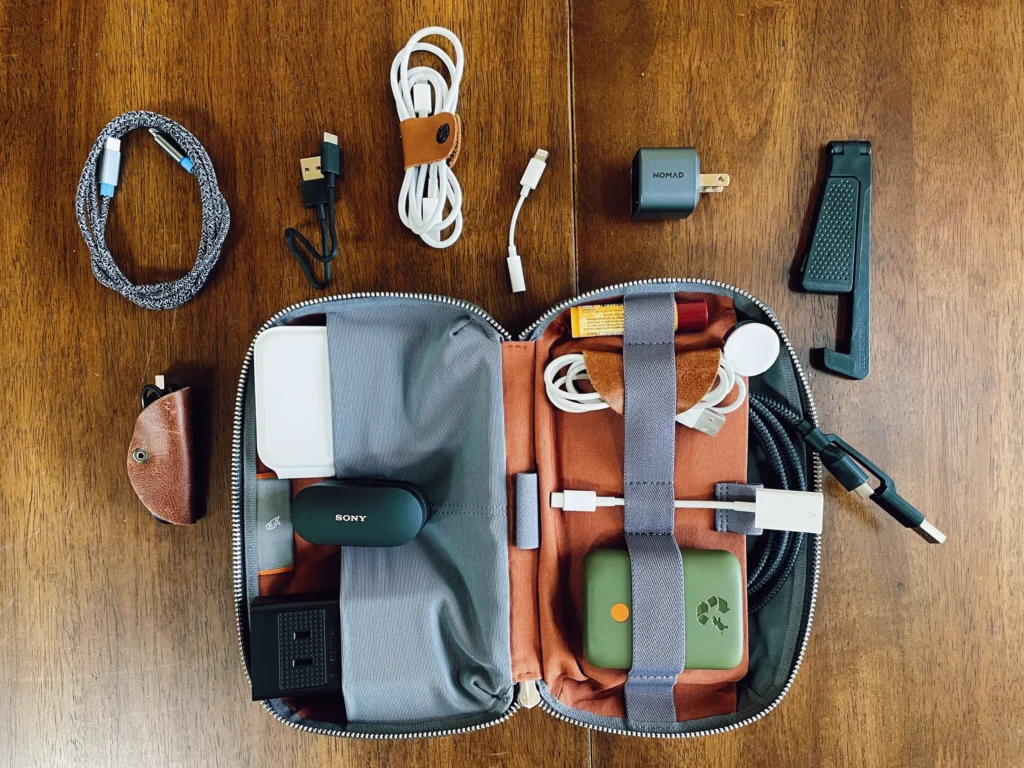
There is a moment almost every traveler knows intimately. You are settled into an airport lounge or perched at a cafe in Milan, needing twenty minutes of high-focus work before boarding, only to unzip your carry-on and encounter a tangled mess of rubber cords, proprietary charging bricks, plastic dongles, and dead battery packs.
For the modern traveler, packing heavy is no longer about bulky coats or excessive pairs of shoes—it is about tech sprawl. Carrying separate power supplies for your laptop, tablet, phone, smartwatch, and noise-canceling headphones does not just add dead weight to your weekender; it introduces unnecessary friction to your journey.
Traveling light is not about digital deprivation. It is about curation. By migrating to a streamlined, multi-functional ecosystem of premium travel accessories, you can cut the cord clutter down to zero, charge everything faster, and breeze through airport security with a featherlight carry-on.
Here is how smart tech travelers pack smarter, move lighter, and engineer the ultimate cable-free setup.
The Cable Trap: Why Tech Luggage Becomes Unmanageable
The average remote executive or jet-setter carries an average of four connected devices: a high-drain laptop, an iPad or e-reader, a flagship smartphone, and wearable peripherals. Historically, each demanded its own power standard: USB-A cubes, proprietary barrel pins, magnetic smartwatch pucks, and bulky power bricks that monopolize wall outlets.
When you multiply those power bricks across international destinations with varying wall-socket standards, travelers end up carrying:
- A nest of tangled 1-meter and 2-meter wires
- Two to three proprietary high-wattage power bricks
- Cheap plastic travel plug converters that sag out of loose hotel wall outlets
- Standalone port hubs and slow portable batteries
The result is a dedicated two-pound tech pouch crammed with redundant silicone. Transitioning to modern luxury travel tech means replacing brute quantity with intelligent silicon, high-bandwidth USB-C standards, and magnetic multi-device chargers.
The Core Trinity: Modern Tech Accessories for Business Travel
To eliminate 80% of your cord pouch overnight, your travel setup only needs three foundational components: a high-wattage multi-port GaN charger, an airline-compliant fast-charging battery, and a versatile multi-port hub.
1. Gallium Nitride (GaN): One Wall Charger to Rule Them All
The single biggest leap in mobile charging over the last decade is the shift from silicon to Gallium Nitride (GaN). GaN semiconductors transfer power far more efficiently, generate less heat, and allow internal components to sit dramatically closer together.
For frequent flyers, this means a GaN power unit the size of an egg can deliver 65W to 100W of power—enough to rapidly charge a 16-inch MacBook Pro, an iPad Pro, and an iPhone simultaneously from a single wall socket.
When evaluating the best travel charger, look for a USB-C charger for travel that supports:
- Power Delivery 3.0 / PPS (Programmable Power Supply): Ensures Samsung, Apple, and PC devices receive their exact optimal wattage without overheating.
- Foldable Prongs: Protects the inside of your luxury leather travel bag from scratches.
- Interchangeable or Included International Plugs: Seamlessly adapts to UK, EU, US, and AU outlets without needing stackable converters.

2. High-Density Airline-Safe Power Banks
A dead laptop battery in the middle of a cross-country flight without under-seat AC power can derail an entire workday. However, standard portable chargers are either too weak to charge laptops or too bulky to carry comfortably.
The sweet spot for a travel power bank is a capacity between 12,000mAh and 25,000mAh (well under the FAA and international airline limit of 100Wh) with at least 65W to 100W two-way Power Delivery. Having a smart digital display on your battery bank eliminates guesswork by showing remaining charge percentage, real-time input wattage, and time-to-full metrics.
3. The Low-Profile Multi-Port USB-C Hub
Modern ultrabooks have sacrificed legacy ports in the name of razor-thin aesthetics. If your travel workflow involves presenting on client monitors, transferring photos from an SD card, or plugging into secure wired hotel ethernet, carrying five individual dongles defeats the purpose of traveling light.
A dedicated USB-C hub for travel consolidates these functions into an aluminum chassis no larger than a candy bar, keeping your workspace clutter-free while supporting high-res video output and high-speed data transfers on the go.
Cutting the Cord: Going Fully Wireless on the Move
While consolidating wall bricks reduces bulk, switching to wireless charging formats removes cable clutter from your temporary nightstand or hotel desk entirely.
| Travel Accessory | Old Setup (Weight & Clutter) | Smart Tech Setup (Consolidated) | Space & Weight Saved |
| Wall Power | 3 OEM bricks (Laptop, Phone, Watch) | 1x 100W Multi-Port GaN Charger | ~65% volume reduction |
| Nightstand Charging | 3 loose rubber cords running across floor | 1x 3-in-1 Foldable Magnetic Station | Zero cord tangles |
| Display & Media | HDMI dongle, USB adapter, SD reader | 1x Sleek 6-in-1 Aluminum USB-C Hub | Replaces 3 loose dongles |
| In-Flight Audio | Tangled airline 3.5mm wired earbuds | 1x Wireless Bluetooth Flight Audio Transmitter | Full wireless freedom |

Foldable 3-in-1 Magnetic Charging Stations
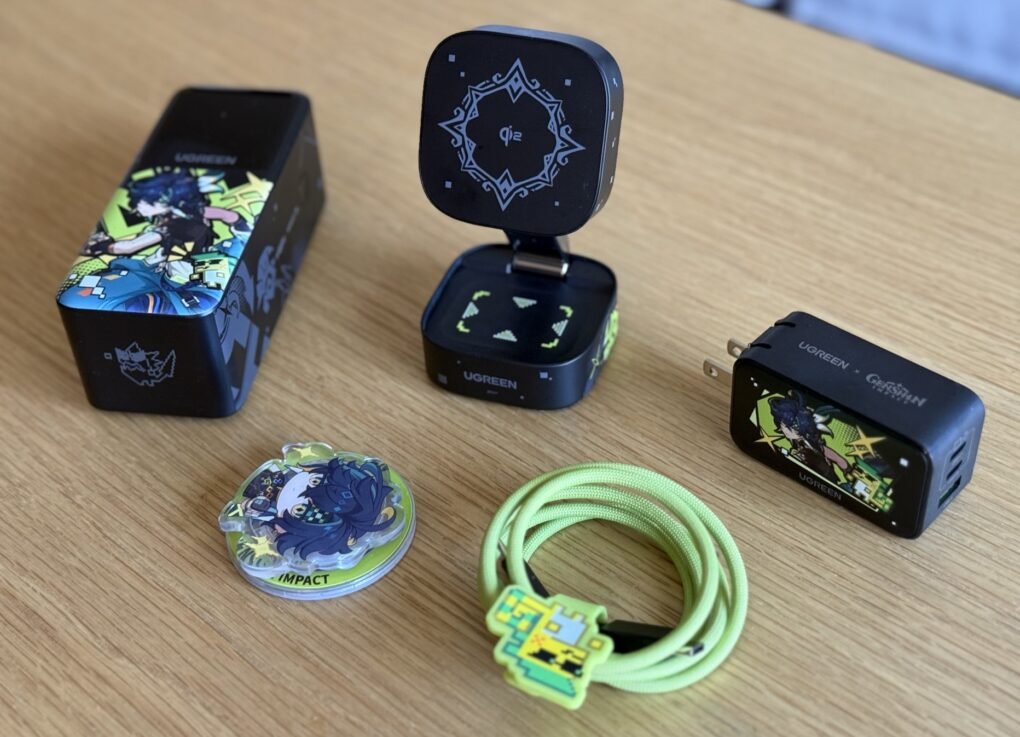
Hotel nightstands are notorious for having a single, hard-to-reach outlet behind the headboard. Instead of stringing three separate cables across the bed, pack a foldable Qi2 or MagSafe-compatible 3-in-1 charging stand.
These stations fold completely flat—taking up no more room than a passport holder—and open up to magnetically suspend your phone in StandBy mode while simultaneously charging your Apple Watch and wireless earbuds on a secondary pad behind it. One USB-C cable powers the entire pad.
Bluetooth Flight Audio Transmitters
Nothing shatters the feeling of luxury travel gadgets faster than plugging cheap, scratchy airline headphones into an in-flight entertainment screen. A wireless audio flight transmitter plugs directly into standard single or dual 3.5mm airplane audio jacks and broadcasts high-fidelity audio over aptX Low Latency Bluetooth straight to your personal noise-canceling headphones (like your Sony WH-1000XM5 or AirPods Max). You can watch movies wire-free, without tangling cords in your meal tray.
Blueprint: Curating Your Minimalist Travel Tech Kit
Building a high-efficiency travel tech kit is an exercise in intentionality. Every item must earn its place by serving more than one device or solving a critical failure point.
       [ MINIMALIST TRAVEL TECH KIT ]
                     │
     ┌───────────────┼───────────────┐
     ▼               ▼               ▼
 1x 100W GaN     1x 100W Battery   1x 3-in-1 Mag
 Multi-Charger      Pack (12k)     Travel Stand
     │               │               │
     └───────────────┼───────────────┘
                     │
     ┌───────────────┴───────────────┐
     ▼                               ▼
 2x Braided 240W                1x 6-in-1 USB-C
 USB-C Cables (1m / 2m)          Slim Hub
The “Rule of Two” Cables
To truly replace a bag full of cables, standardize on high-spec wires. When you use universal USB-C ports across your gear, you only need to pack two physical cables:
- One Short (1m / 3ft) Braided 240W USB-C to USB-C Cable: Built with an integrated E-Marker chip for high-speed device charging and fast data transfer at your desk or in an airport seat.
- One Long (2m / 6.6ft) Silicone USB-C Cable: Perfect for reaching awkwardly placed wall outlets in older boutique hotels or international lounges.
High-wattage rated cables (100W–240W) can effortlessly power a workstation laptop, but are completely backward compatible with low-draw accessories like wireless mice and Kindle readers.

Protecting Your Tech Gear
Ditch unpadded mesh bags that let metal chargers rub against each other. Instead, invest in a semi-rigid, water-resistant tech organizer pouch featuring internal elastic loops and magnetic dividers. Keeping your tech accessories for business travel organized ensures you can take inventory of your kit in under three seconds before checking out of your hotel room.
Curated Gear Comparison: Finding the Best Travel Tech Accessories
Selecting the right gear depends on whether your priority is raw ultralight mobility or heavy-duty creative workstation power:
| Category | The Road Warrior (Ultralight & Agile) | The Digital Nomad (Pro Workstation) |
| Primary Wall Charger | UGREEN Nexode 65W GaN (Ultra-Slim) | UGREEN Nexode 100W / 140W Multi-Port |
| Backup Battery | 10,000mAh 30W Pocket Power Bank | 12,000mAh–25,000mAh 100W+ Laptop Battery |
| Port Expansion | Compact 4-in-1 USB-C Hub | Comprehensive 6-in-1 or 9-in-1 Hub |
| Cabling System | 1x 1m Braided Cable + 1x Multi-Tip | 2x 240W E-Marked Braided Silicone Cables |
| Total Weight | Under 14 oz (400g) | Approx. 26 oz (750g) |
By matching your wattage needs to your daily hardware demands, you avoid carrying extra ounces of silicon that you will never tap into.
Frequently Asked Questions
What are the essential tech accessories for travel?
The essentials include a multi-port GaN charger, a compatible power bank, two quality USB-C cables, a compact USB-C hub, and a protective tech organizer. Add wireless earbuds or a foldable charging station based on your devices and travel needs.
How can I reduce cable clutter when traveling?
Standardize on compatible USB-C charging wherever possible, use one multi-port charger for several devices, and carry one short cable and one longer cable. A compact organizer keeps everything separated and easy to access.
Is a 100W GaN charger worth buying for travel?
A 100W GaN charger can be useful if you carry a laptop alongside a phone and tablet. Check your laptop’s required wattage, the charger’s combined output across ports, and whether its plug is compatible with your destinations. A 65W charger may be sufficient for lighter setups.
Can I bring a power bank on an airplane?
Power banks generally must travel in carry-on baggage rather than checked baggage. Batteries up to 100Wh are commonly permitted without airline approval, but restrictions vary by airline and country. Check your airline’s current rules, especially for batteries above 100Wh, and protect the terminals against short circuits.
How many cables should I pack for a business trip?
For a typical USB-C-based setup, two cables are a practical starting point: one short cable for desk use and one longer cable for awkwardly positioned outlets. Pack additional cables only when a device requires a proprietary connector or a separate connection standard.
Are wireless charging stations useful for frequent travelers?
Yes. A foldable multi-device charging station can reduce bedside cable clutter and charge compatible phones, earbuds, and smartwatches. Confirm device compatibility, charging requirements, and the station’s included power adapter before purchasing.
What should I look for in a travel USB-C hub?
Look for the ports you actually use, such as HDMI, USB-A, SD card readers, and Ethernet. Check display resolution and refresh-rate support, data transfer speeds, operating-system compatibility, and USB-C Power Delivery pass-through limits.
How do I choose between a lightweight and a professional travel tech kit?
Choose a lightweight kit if your work mainly involves browsing, calls, and documents. A professional kit may need a higher-wattage charger, a more capable USB-C hub, additional storage connectivity, and a higher-output power bank for demanding devices.